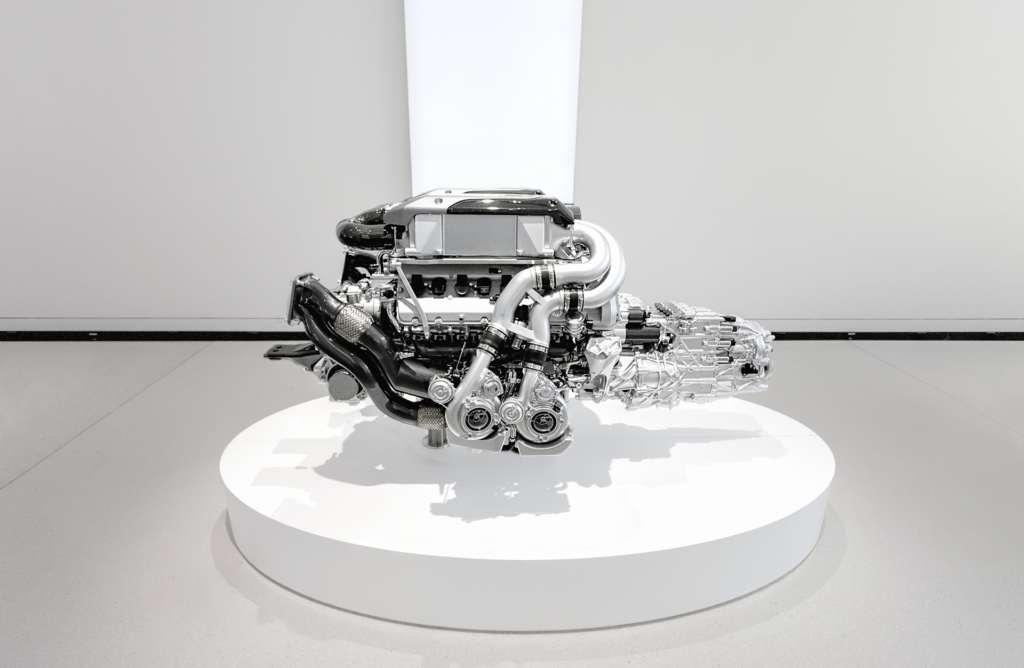
At iLusso, we spend every day around some of the most incredible engines ever put into production cars. And if there is one thing we have learned from buying and selling exotic cars, it is that the engine still matters.
Horsepower numbers are important. So are 0-60 times, top speed, hybrid systems, and lap records. But for many exotic car buyers, the way an engine delivers that performance is just as important as the number itself. The sound, the response, the vibration, and the personality of an engine can completely change the driving experience.
V12s and even V10s remain some of the most highly regarded engine types in the exotic car world. Many of the greatest supercars ever built use them, and from what we see at iLusso, they always seem to be among the most exciting cars for clients to drive and collect. As the automotive industry moves toward turbocharging, hybrid power, and electrification, those naturally aspirated engines are becoming even more special.
From screaming Italian V12s to compact twin-turbo V8s, here is a closer look at the different exotic car engine types and some of the incredible vehicles that use them.
V12 Engines
The Kings of Exotic Cars
For many enthusiasts, the V12 engine sits at the very top of the exotic car hierarchy.
A V12 is not automatically better simply because it has more cylinders, but there is something undeniably special about the way these engines perform. They are smooth, powerful, and capable of producing some of the most unforgettable exhaust notes in automotive history.
Ferrari and Lamborghini have built much of their reputations around the V12. Cars like the Ferrari 812 Superfast, Ferrari Daytona SP3, Lamborghini Aventador, and Lamborghini Revuelto represent the absolute pinnacle of their respective lineups.
Some of our favorite V12-powered exotics include:
- Ferrari 812 Superfast: Its naturally aspirated 6.5-liter V12 delivers an experience that feels increasingly rare in the modern supercar world. It is powerful, responsive, and sounds exactly like a Ferrari V12 should.
- Lamborghini Aventador: The Aventador’s 6.5-liter V12 became one of the defining engines of its generation. Whether in an SVJ, Ultimae, or standard Aventador, the drama begins the second you press the start button.
- Ferrari LaFerrari: Ferrari combined its legendary naturally aspirated V12 with hybrid technology to create one of the most desirable hypercars ever built. It proves that electrification can add performance without completely taking away the character of an internal combustion engine.
- Pagani Huayra: While its engine comes from Mercedes-AMG, the Huayra’s twin-turbocharged V12 is a perfect example of how much personality a modern forced-induction engine can still have.
There is a reason V12 cars consistently attract collectors. They represent excess in the best possible way.
V10 Engines
The Sound of a Dying Era
If the V12 is king, the V10 might be the enthusiast favorite.
The V10 engine has powered some of the most iconic exotic cars of the last two decades. It offers a high-revving character that sits somewhere between the smoothness of a V12 and the aggressive personality of a V8.
The Lamborghini Gallardo and Huracán are perhaps the best-known examples. Audi also built its R8 around a naturally aspirated V10, creating one of the most usable exotic cars ever made.
- Lamborghini Huracán Tecnica: The naturally aspirated 5.2-liter V10 is the heart of the Tecnica’s personality. With Lamborghini transitioning the newer Temerario toward a twin-turbo V8 hybrid setup, the V10 era is becoming increasingly important to collectors.
- Lamborghini Huracán STO: This is one of the purest expressions of the Lamborghini V10. It is loud, naturally aspirated, and designed to feel as close to a race car as possible while remaining road legal.
- Audi R8 V10: The R8 shared much of its engine architecture with Lamborghini, giving buyers access to a naturally aspirated V10 in a package that could be surprisingly comfortable for regular driving.
At iLusso, these are exactly the kinds of engines that get people talking. A high-revving V10 is not just about performance. It creates an event every time you drive the car.
V8 Engines
Compact, Powerful, and Everywhere
The V8 engine might be the most versatile powerplant in the exotic car world.
Modern V8 engines can be naturally aspirated, supercharged, or twin-turbocharged. They can power a comfortable grand tourer, a mid-engine supercar, or a track-focused hypercar.
Some of today’s most impressive exotic cars rely on a V8.
- Ferrari 488 Pista: Its twin-turbocharged V8 delivers massive power in a compact package. The result is explosive acceleration while maintaining the sharp handling Ferrari is known for.
- McLaren 720S: McLaren’s twin-turbo V8 has become one of the most recognizable engines in the modern supercar segment. The lightweight construction of the car combined with its powerful engine creates truly outrageous performance.
- Ferrari SF90: Ferrari takes the V8 formula even further by combining a twin-turbocharged engine with electric motors. The result is hypercar-level acceleration from a production supercar.
- Chevrolet Corvette Z06: The naturally aspirated flat-plane-crank V8 proves that exotic-level engine experiences are not limited to European manufacturers. Its high-revving personality gives the Corvette a sound and feel unlike most traditional American V8s.
A V8 may not always have the prestige of a V12, but modern engineering has made it one of the most effective engines in high-performance automotive design.
Twin-Turbocharged Engines
Power Through Forced Induction
Turbocharging has changed the exotic car industry.
By forcing more air into the engine, turbochargers allow manufacturers to create significantly more power from smaller displacement engines. That means massive horsepower and torque figures without necessarily needing a huge engine.
The tradeoff is that some enthusiasts prefer the immediate response and sound of a naturally aspirated engine. Still, there is no denying what twin-turbo technology has done for modern performance.
Some standout examples include:
- McLaren 750S: Its twin-turbocharged V8 delivers massive performance while keeping the car relatively lightweight. The power delivery is brutally quick, making it one of the most capable road-going McLarens available.
- Ferrari F8 Tributo: Ferrari refined its twin-turbo V8 formula into a supercar that delivers huge power without losing the emotional side of the driving experience.
- Porsche 911 Turbo S: The twin-turbo flat-six gives the 911 Turbo S incredible acceleration and real-world usability. It is one of the best examples of forced induction improving performance without compromising everyday drivability.
- Bugatti Chiron: Bugatti took the concept to another level with its quad-turbocharged W16 engine. This is not simply forced induction for efficiency. It is engineering designed to produce hypercar performance on an almost unbelievable scale.
Flat-Six Engines
The Porsche Formula
Few engines are as instantly associated with one brand as the flat-six is with Porsche.
The horizontally opposed layout helps create a lower center of gravity, which contributes to Porsche’s famous handling characteristics. Over the decades, the flat-six has evolved from an air-cooled engine into a modern high-performance platform capable of producing serious power.
- Porsche 911 GT3 RS: The naturally aspirated flat-six remains a favorite among drivers who want response, sound, and track-focused performance.
- Porsche 911 Turbo S: Turbocharging transforms the flat-six into an acceleration monster while retaining the everyday usability that makes the 911 so popular.
- Porsche 911 Carrera: Even the more approachable variants demonstrate why Porsche has remained loyal to this engine layout for generations.
The flat-six may not sound like a screaming V10 or V12, but it has a personality all its own.
V6 Engines
Smaller Displacement, Serious Performance
A V6 may sound less exotic on paper, but modern supercar engineering has completely changed what these engines are capable of.
With turbocharging and hybrid assistance, a V6 can now produce performance figures that would have seemed impossible just a few years ago.
The Ferrari 296 GTB is a perfect example. Its compact twin-turbocharged V6 works alongside an electric motor to produce extraordinary performance in a relatively small package.
- Ferrari 296 GTB: This hybrid V6 demonstrates where the supercar industry is heading. It is incredibly fast, technologically advanced, and capable of delivering an engaging driving experience despite having fewer cylinders than Ferrari’s traditional V8 and V12 models.
- McLaren Artura: McLaren’s hybrid V6 represents a new generation of supercars focused on combining lightweight engineering with electrified performance.
The V6 is proof that cylinder count is no longer the only measure of performance. Still, for collectors, the emotional appeal of the larger engines remains difficult to replace.
W16 Engines
Bugatti’s Engineering Statement
There is really only one name that comes to mind when discussing the W16 engine: Bugatti.
The Bugatti Veyron and Chiron became famous not only for their record-breaking performance but also for the sheer complexity of their powerplants. The quad-turbocharged W16 engine is one of the most ambitious production engines ever created.
Cars like the Chiron were built around the idea that there should be virtually no compromise in performance.
The numbers are staggering, but the W16 is also important because it represents a specific era of automotive engineering. As Bugatti transitions toward newer powertrain technologies, these engines will likely become even more significant in the collector market.
Hybrid Powertrains
The New Exotic Car Formula
Hybrid powertrains have become increasingly common in modern exotic cars.
The basic idea is simple. Combine an internal combustion engine with electric motors to create more power, instant torque, and improved performance. In reality, the engineering behind these systems is anything but simple.
Cars like the Ferrari SF90, Lamborghini Revuelto, McLaren P1, and Porsche 918 Spyder have demonstrated just how effective hybrid technology can be.
The biggest advantages include:
- Instant electric torque: Electric motors can provide immediate power, helping fill gaps in the combustion engine’s power delivery and improving acceleration.
- More overall performance: Hybrid systems allow manufacturers to combine the strengths of multiple power sources, resulting in horsepower figures that would be difficult to achieve with the engine alone.
- Improved traction: Electric motors can be strategically used to deliver power across different wheels, helping improve grip and performance.
For iLusso, hybrids represent an interesting middle ground. They offer the incredible performance benefits of electrification while still preserving the sound and emotional connection of a combustion engine.
Electric Motors
A Different Kind of Speed
Fully electric exotic cars are already proving that they can compete with, and sometimes outperform, traditional supercars in acceleration.
Cars like the Rimac Nevera can produce levels of instant torque that completely change what drivers expect from a high-performance vehicle.
But the exotic car market is not always logical.
Many collectors are not simply looking for the fastest car on paper. They want noise, vibration, shifting, engine character, and drama. An electric car can be unbelievably fast while still feeling completely different from a naturally aspirated V12.
That does not mean electric performance is irrelevant. It simply means that the emotional side of exotic car ownership will continue to matter.
Which Exotic Car Engine Type Is the Best?
There is no single answer.
If you want the ultimate combination of sound, smoothness, and prestige, it is hard to argue against a V12. If you want a high-revving and increasingly rare driving experience, the V10 is difficult to beat. Modern twin-turbo V8s offer incredible horsepower and everyday usability, while hybrid systems provide acceleration figures that traditional engines alone struggle to match.
Ultimately, the best engine depends on what you want to feel behind the wheel.
That is why the exotic car world remains so interesting. A Ferrari V12, Lamborghini V10, Porsche flat-six, McLaren twin-turbo V8, and Bugatti W16 can all deliver extraordinary performance, yet none of them feel remotely the same.
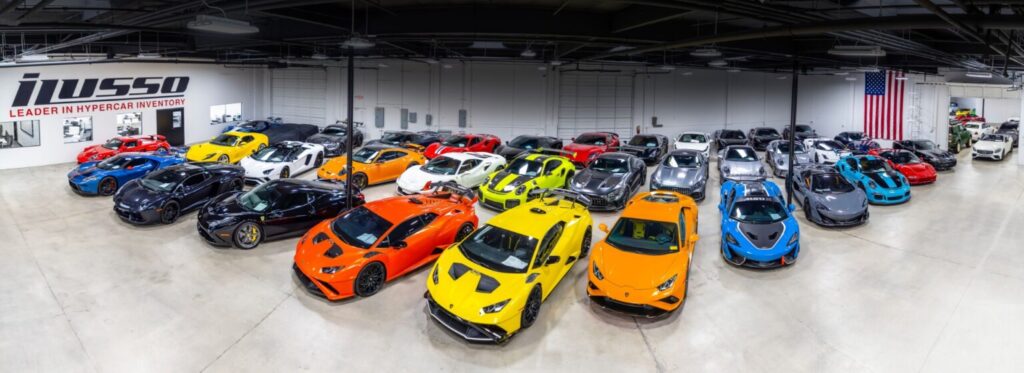
Find Your Perfect Exotic Car at iLusso
At iLusso, we buy and sell exotic cars every day, which gives us a firsthand look at what enthusiasts and collectors are looking for in the current market.
Some clients want the latest hybrid technology. Others are specifically hunting for the final naturally aspirated V10 or V12. Some want a twin-turbocharged supercar capable of unbelievable acceleration, while others simply want an engine that makes them turn around and look at the car one more time after parking it.
Whatever your preference, our team understands that an exotic car is more than a list of specs.
Browse our inventory or contact iLusso today to find the engine, the sound, and the driving experience that fits your collection.



Most Recent Posts
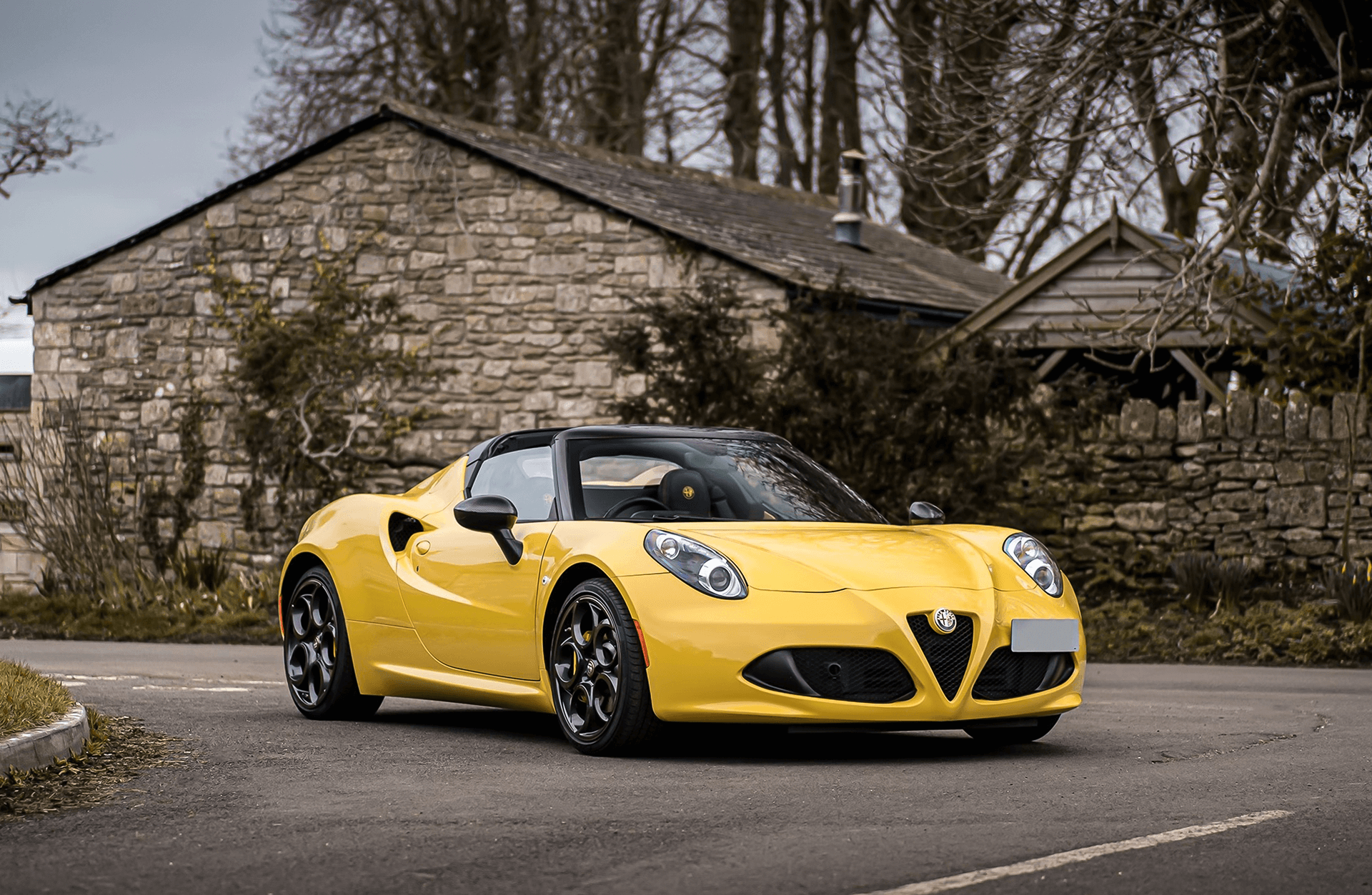
Will the Alfa Romeo 4C Spider Become a Classic Exotic Car?
Monday 30,2022 By aanEditor
Alfa Romeo vehicles have always been among the most sought after and highly collectible cars, so it would be no surprise if there’s another of those with the 4C Spider. If you’re looking to buy an Alfa Romeo, this could be the classic car you should choose. What exactly is it that makes Alfa Romeo’s cars just so good anyway? One of their strongest
Read More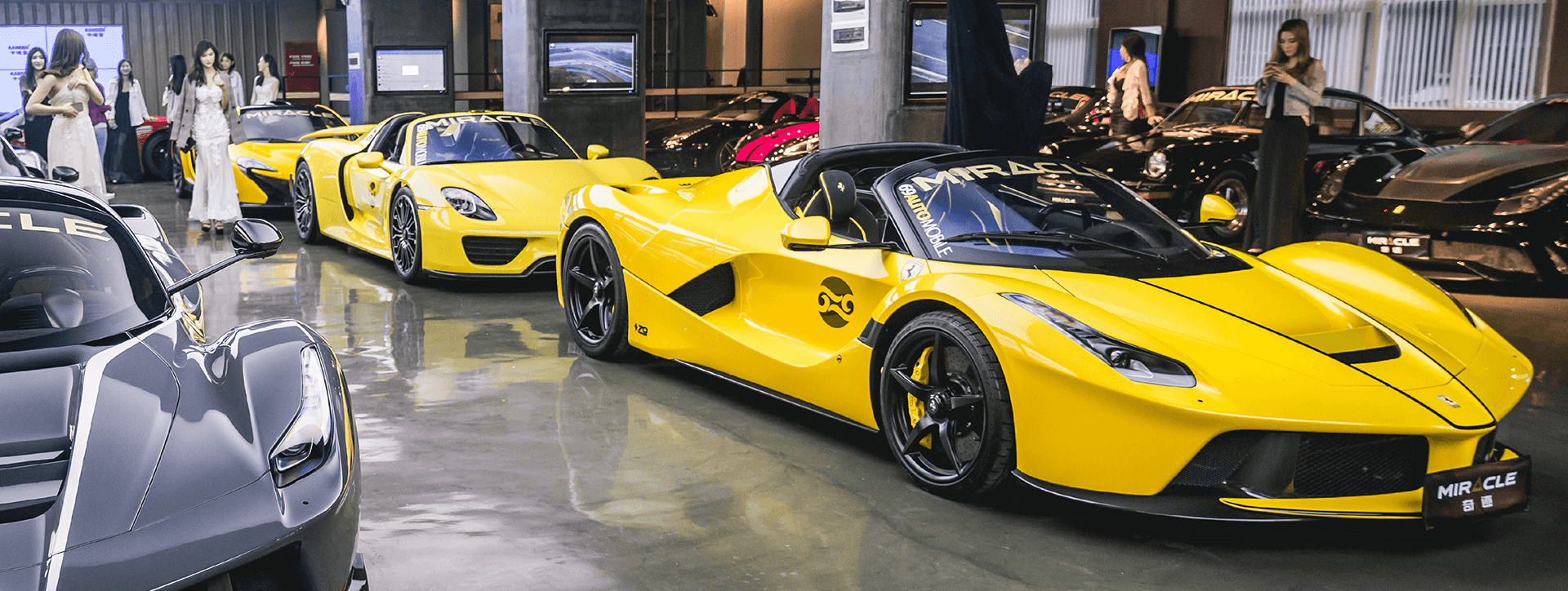
Will EV Hypercars Ever Become More Popular Than Traditional Hypercars?
Wednesday 10,2026 By aanEditor
For years, the automotive world has been asking the same question: Are electric hypercars the future? On paper, the answer seems obvious. Modern all-electric hypercars are producing performance numbers that would have seemed impossible just a decade ago. Instant torque, incredible acceleration, advanced torque vectoring systems, and cutting-edge
Read More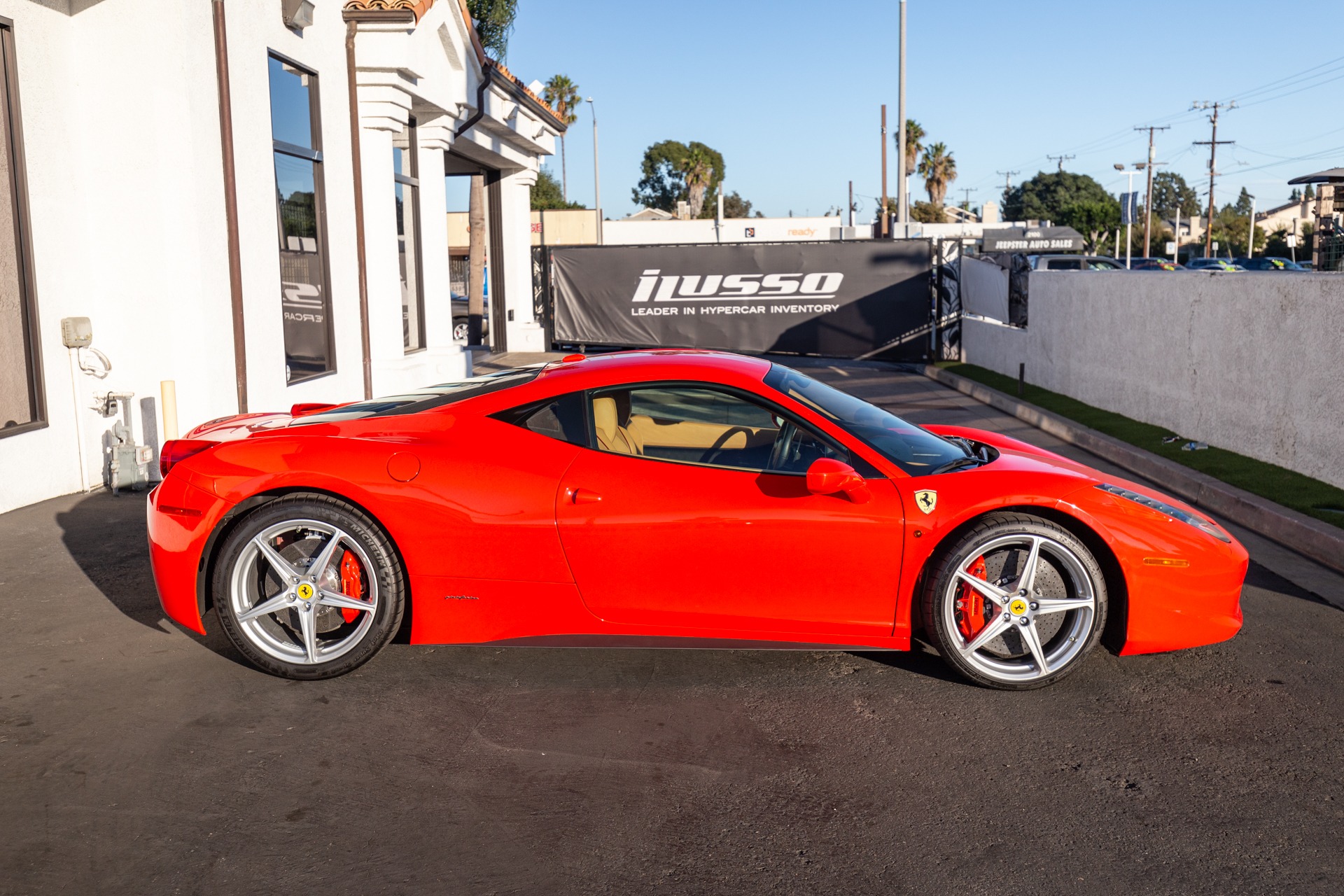
Why the Ferrari 458 Is Still A Car Enthusiasts Dream Car.
Wednesday 18,2023 By aanEditor
The Ferrari 458 is a mid-engined sports car produced by the Italian automotive manufacturer Ferrari. The 458 replaced the Ferrari F430, and was first officially unveiled at the 2009 Frankfurt Motor Show. It was succeeded by the Ferrari 488. The 458 is powered by a 4.5-liter V8 engine, which is capable of producing 562 horsepower and 398 lb-ft of torque.
Read More