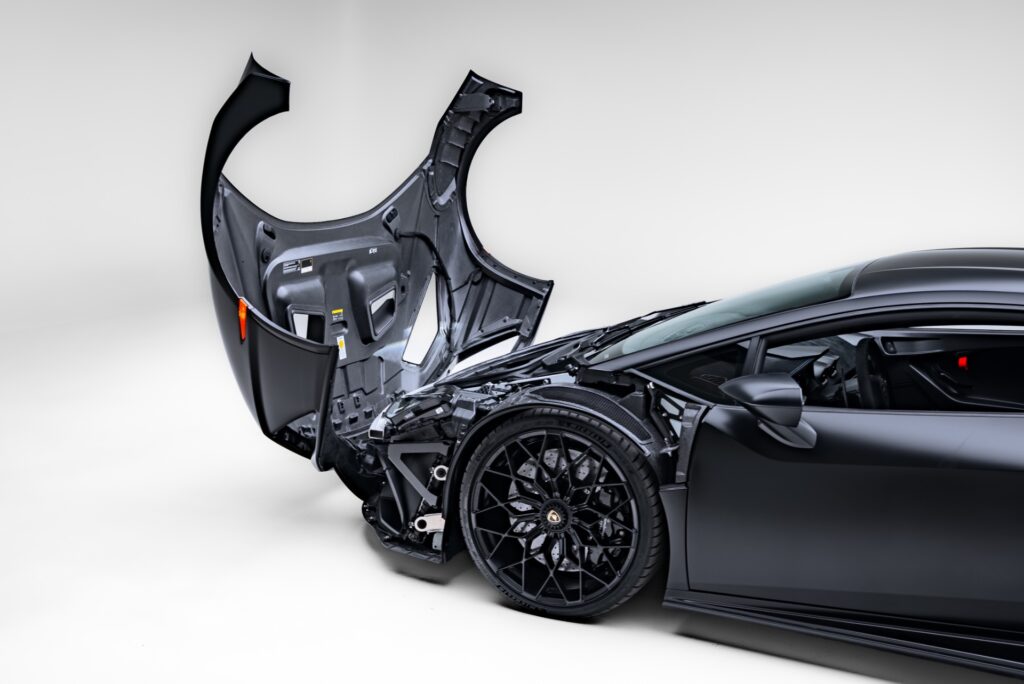
Lamborghini maintenance costs can range from around $2,000 to $10,000 per year for many models, but that’s a big range for a reason. A newer Huracán or Urus that is driven a few thousand miles a year and doesn’t need any major repairs may cost closer to $2,000 to $4,000 annually to maintain. Move into an Aventador or another more expensive, mechanically complex Lamborghini, and budgeting $5,000 to $10,000 a year is more realistic.
Older Lamborghinis are another story. At iLusso, we’d recommend budgeting somewhere around $5,000 to $15,000 annually for many pre-2010 models. As a supercar ages, parts can become harder to source, fewer technicians may have the knowledge required to service it correctly, and one larger repair can quickly push your annual maintenance costs beyond what you’d spend on a newer Lamborghini.
That’s part of Lamborghini ownership. You’re maintaining an exotic car engineered for extraordinary performance, and the cost of keeping it performing correctly reflects that.
Average Lamborghini Maintenance Cost by Model
How much should you actually budget? Here’s a general starting point based on what we see in the exotic car market:
Lamborghini Model | Estimated Annual Maintenance Budget |
Huracán | $2,000-$4,000 |
Urus | $2,000-$4,000 |
Revuelto | $3,000-$6,000+* |
Gallardo | $3,000-$7,000+ |
Aventador | $5,000-$10,000+ |
Older/pre-2010 Lamborghini | $5,000-$15,000+ |
*Newer Lamborghinis may have scheduled maintenance included for a period of time, so actual out-of-pocket costs can be lower while that coverage remains in effect.
These aren’t guarantees. They’re reasonable budgets for routine maintenance and typical upkeep when nothing major goes wrong. A Lamborghini that needs a clutch, carbon-ceramic brake work, suspension repairs, or another significant service can cost considerably more in a particular year.
Mileage, service history, driving habits, and the condition of the individual car matter just as much as the badge on the back.
Lamborghini Huracán Maintenance Cost
If you want a Lamborghini that’s relatively approachable to maintain, the Huracán is a strong place to start.
The Huracán has developed a good reputation for reliability among modern exotic cars. For a newer example driven only a few thousand miles each year, we’d generally expect an annual maintenance budget around $2,000 to $4,000 when no major repairs are required.
Its 5.2-liter V10 and dual-clutch transmission have also been used extensively across the Huracán’s long production run. That doesn’t make maintenance inexpensive by ordinary-car standards, but it can make the ownership experience considerably less intimidating than some older or more mechanically demanding Lamborghinis.
Keep up with scheduled maintenance, and a well-cared-for Huracán can be a surprisingly usable exotic.
Lamborghini Urus Maintenance Cost
The Urus is another Lamborghini that can land toward the lower end of the brand’s maintenance spectrum. We’d generally budget around $2,000 to $4,000 per year for routine maintenance on a newer Urus, assuming normal use and no significant repairs.
But don’t confuse “lower-cost Lamborghini” with inexpensive vehicle ownership.
The Urus is a heavy, extremely powerful performance SUV. Tires and brakes can become significant expenses, especially if you take advantage of the performance regularly. High-octane fuel, insurance, and other associated costs should also be considered when figuring out what you’ll actually spend on the vehicle each year.
Lamborghini Revuelto Maintenance Cost
The Revuelto introduces an entirely different level of technology. Its naturally aspirated V12 works alongside three electric motors, bringing hybrid components into Lamborghini’s flagship supercar.
Once you’re paying for maintenance yourself, budgeting roughly $3,000 to $6,000 or more annually provides a reasonable starting point, with the understanding that the Revuelto is still a very new car. Long-term service costs will become clearer as more examples accumulate mileage and age.
There is also an important caveat for new-car buyers: scheduled maintenance is currently included for the first five years with the Revuelto. That can significantly change how much an owner actually pays out of pocket during the early period of ownership.
Lamborghini Gallardo Maintenance Cost
A well-maintained Gallardo can be relatively reasonable to own for an older Lamborghini, but the individual car matters enormously.
We’d generally budget somewhere around $3,000 to $7,000 per year. The Gallardo is old enough now that service history and previous ownership can make a substantial difference in what happens next.
Transmission configuration deserves particular attention. Many Gallardos use Lamborghini’s e-gear automated manual transmission, and clutch wear can become a major consideration. Driving habits have a significant effect here, so a detailed inspection and an understanding of remaining clutch life can be extremely valuable before buying one.
A cheap Gallardo with deferred maintenance can become an expensive Gallardo very quickly.
Lamborghini Aventador Maintenance Cost
The Aventador sits at the other end of the spectrum.
This is a naturally aspirated V12 flagship with an ISR single-clutch transmission and components that are generally more expensive than what you’ll find on a Huracán. At iLusso, we’d consider roughly $5,000 to $10,000 per year a more realistic maintenance budget for an Aventador.
And that’s a budget, not a ceiling.
If an Aventador needs significant mechanical work, a major repair can run into the tens of thousands of dollars. That’s why service history and a detailed pre-purchase inspection become especially important when you’re shopping for a used example.
An Aventador may have depreciated substantially from its original sticker price, but its parts haven’t suddenly become economy-car parts.
Why Are Older Lamborghinis More Expensive to Maintain?
Age can change the Lamborghini maintenance equation considerably.
For a Lamborghini built before 2010, we’d be more comfortable budgeting around $5,000 to $15,000 annually. Some years will cost less. A year involving deeper mechanical needs could cost considerably more.
The problem isn’t necessarily that older Lamborghinis were poorly built. It’s that you’re dealing with an exotic car that may now be 20, 30, or even 40 years old.
As the supercar ages, owners may encounter aging belts, gaskets, hoses, seals, electrical components, and other parts that go beyond an ordinary annual service. Genuine Lamborghini parts for certain older models may be more difficult or expensive to source. You also need experienced technicians who genuinely understand that particular generation of Lamborghini.
Finding someone capable of changing the oil isn’t enough. You want someone who understands what they’re looking at when they perform the detailed inspection.
What Does Routine Lamborghini Maintenance Include?
Your Lamborghini maintenance schedule depends on the model and model year, so the manufacturer’s recommendations for your specific vehicle should always take priority. Generally, scheduled maintenance can involve:
- Oil and filter changes
- Fluid checks and inspections
- Brake fluid changes
- Air, cabin, and other filter replacements
- Brake inspections
- Tire inspections
- Cooling system checks
- Spark plug replacements at specified intervals
- Transmission and drivetrain inspections
- A broader visual inspection of the vehicle
Not every item happens at every annual service. Some are part of an intermediate service or major service performed at a particular mileage or time interval.
For example, Lamborghini’s published maintenance information for the Urus shows different levels of inspections at successive services, with items such as engine oil, filters, brake fluid, and spark plugs replaced at designated intervals rather than every visit.
Following the correct service intervals matters for more than reliability. A documented maintenance history can also become important when it’s time to sell the car.
How Much Does a Lamborghini Oil Change Cost?
An oil change is one of the more predictable pieces of Lamborghini routine maintenance, but pricing can vary considerably by model, location, and service provider.
The important thing is to avoid looking at a Lamborghini oil change as if you’re simply paying for several quarts of oil and a filter. Access can be more complicated; the correct fluids and procedures matter, and servicing the vehicle is often an opportunity for experienced technicians to inspect other systems.
For that reason, many owners think in terms of an annual service rather than an isolated oil change.
If you’re comparing quotes, make sure you’re comparing the work being performed rather than simply the number at the bottom. One service may include little beyond oil and a filter, while another includes fluid inspections, diagnostic work, and a much more detailed inspection.
How Much Do Lamborghini Brakes and Tires Cost?
Brakes and tires are two areas where driving habits can make a dramatic difference.
Many high-performance Lamborghinis use carbon-ceramic brakes. These systems offer exceptional stopping performance, but pads and rotors can be extremely expensive when replacement is eventually required.
Tire wear can be similarly dependent on how you use the car. A Lamborghini that spends most of its life cruising to weekend events is going to have very different needs from one that sees frequent spirited driving or track days.
Track use can accelerate wear on:
- Tires
- Brake pads and rotors
- Fluids
- Suspension and drivetrain components
Factor in balancing, alignment, and the cost of performance tires themselves, and tire replacement can become a meaningful part of the ownership budget.
If you’re planning regular track days, track insurance should also be considered separately from ordinary maintenance and insurance coverage.
What Affects Lamborghini Maintenance Costs?
Two owners with the exact same Lamborghini can spend very different amounts maintaining them.
Mileage is an obvious factor, but how those miles are accumulated matters. Frequent aggressive driving and track days can accelerate tire wear, brake wear, and fluid degradation. Weather conditions and storage can also affect long-term upkeep, particularly if the car sits for extended periods.
The age and condition of the car are equally important. A Lamborghini with complete scheduled maintenance and a documented service history gives you a much clearer idea of what has already been done. A neglected car with a tempting purchase price can be carrying thousands of dollars in deferred maintenance.
Location matters, too. Labor rates differ across the country, and access to an authorized service center or reputable independent shop with experienced technicians isn’t the same everywhere.
Finally, parts matter. Using the correct fluids and genuine Lamborghini parts where appropriate isn’t an area where we’d recommend cutting corners simply to reduce a maintenance bill.
How Often Does a Lamborghini Need Maintenance?
Follow the maintenance schedule specified for your particular model, year, and mileage.
For many owners who put relatively few miles on their Lamborghinis, time-based annual service becomes especially important. Low mileage doesn’t mean fluids, rubber components, batteries, and other systems stop aging.
Depending on the vehicle and its service interval, maintenance over your period of ownership may include an annual service along with more substantial intermediate or major services. Those larger visits can incorporate items such as a brake fluid flush, spark plug replacement, coolant service, filter replacements, or transmission fluid changes when specified for that model.
Don’t wait for something to break before servicing an exotic car. Preventive maintenance is generally a much more comfortable proposition than a major repair.
The Cost of Lamborghini Ownership Goes Beyond Maintenance
If you’re determining whether you can comfortably afford a Lamborghini, annual maintenance is only one part of the equation.
Insurance can be significant, as can fuel costs. Most Lamborghinis require premium high-octane fuel, and fuel economy probably wasn’t the first priority when Lamborghini engineered that V10 or V12.
You’ll also want to consider:
- Depreciation or changes in resale value
- Insurance and, when applicable, track insurance
- Tires and other wear items
- Garage storage or winter storage
- Financing and interest payments
- Registration and taxes
- Detailing and paint protection
- Unexpected repairs
Some of these aren’t technically maintenance costs, but they’re still part of the real cost of car ownership.
Winter storage deserves particular thought if you live somewhere that makes year-round Lamborghini driving impractical. Proper garage storage, battery maintenance, tire care, and periodic attention while the car is parked can help prevent avoidable problems when spring arrives.
How Much Should You Budget for Long-Term Lamborghini Ownership?
We wouldn’t calculate long-term Lamborghini maintenance by simply multiplying one year’s bill by five.
Costs don’t arrive that evenly.
You could own a newer Huracán and have several years dominated by routine annual service. Later in your period of ownership, you might need tires and brake work in the same year. With an older Lamborghini, one unexpected repair can make that year’s costs dramatically higher than the previous one.
That’s why we prefer thinking in terms of a maintenance budget.
For a newer Huracán or Urus, keeping roughly $2,000 to $4,000 available annually for routine maintenance is a reasonable starting point. For an Aventador, we’d move that closer to $5,000 to $10,000. With a pre-2010 Lamborghini, having $5,000 to $15,000 available provides more breathing room for the potential repairs that become increasingly likely with age.
That doesn’t mean you’re guaranteed to spend every dollar. It means a service bill is much less likely to interfere with actually enjoying the car.
Is a Lamborghini Expensive to Maintain?
Yes, a Lamborghini is expensive to maintain compared with a normal vehicle. Compared with other exotic cars, however, the answer gets more nuanced.
A modern Huracán or Urus can be surprisingly manageable if it has been maintained correctly and nothing major goes wrong. An Aventador demands a larger budget, while an aging Lamborghini can introduce more uncertainty as parts become harder to find and deeper mechanical needs arise.
At iLusso, we’d rather see someone buy the right Lamborghini with a strong service history than stretch their budget to purchase the cheapest example of a more expensive model.
The purchase price gets you into the car. Having a realistic maintenance budget helps you keep enjoying it.
Find Your Next Lamborghini at iLusso
Buying the right Lamborghini starts with understanding more than the sticker price. Service history, mileage, previous ownership, specifications, and the condition of the individual car can all affect what ownership looks like after it enters your garage.
iLusso works with Lamborghini and other exotic cars every day, giving our team an understanding of the market that goes beyond simply finding a vehicle for sale.
Explore our exotic car inventory or contact iLusso if you’re looking for a specific Lamborghini. We’ll help you find the right car and understand what you’re buying before you bring it home.