When you’re comparing Porsche vs. Ferrari, you’re looking at two of the most respected performance car manufacturers in the world. Both have decades of racing history behind them, both build exceptionally fast cars, and both have created models that enthusiasts can recognize from a silhouette alone.
But spend time behind the wheel of each, and you’ll quickly realize how different they are.
At iLusso, we see Porsche as the more versatile and attainable of the two brands. Porsche builds exceptionally well-engineered cars that can deliver an incredible driving experience without asking you to sacrifice everyday usability. Ferrari is generally more exotic. The cars tend to be louder, more powerful, more exclusive, and considerably more expensive.
Neither approach is inherently better. The right choice comes down to what you want your car to do and, perhaps more importantly, how you want it to make you feel.
Ferrari vs. Porsche at a Glance
Before we get into the details, here’s the simplest way to compare the two.
| | Ferrari | Porsche |
Pricing | Generally significantly more expensive | Broader range of attainable models |
Performance | Extreme power and exotic performance | Exceptional engineering and usable performance |
Driving Experience | Dramatic, loud, and theatrical | Precise, responsive, and highly refined |
Everyday Use | Possible, but generally less practical | One of Porsche’s greatest strengths |
Model Variety | More limited, exotic-focused lineup | Sports cars, sedans, SUVs, and EVs |
Resale | Strong for desirable models/specifications | Typically very strong, especially for desirable 911s |
Racing Identity | Deeply associated with Formula 1 | Legendary endurance and sports-car racing history |
Ferrari Pros and Cons
Ferrari gets a lot right, which makes coming up with a traditional pros-and-cons list surprisingly difficult.
Ferrari advantages include:
- An unmistakably exotic driving experience
- Extraordinary power and performance
- Exceptional attention to detail
- Distinctive Italian exterior design
- Premium materials and driver-focused interiors
- Formula 1 heritage and enormous brand prestige
- Strong enthusiast and collector demand
The biggest disadvantage is simple: price.
Ferraris are expensive to buy, and ownership costs can be substantial as well. For buyers who can comfortably operate at that level of the market, however, Ferrari delivers an experience very few manufacturers can replicate.
Porsche Pros and Cons
Porsche is similarly difficult to criticize. These are exceptionally well-built cars with a reputation that has been earned over decades.
Porsche advantages include:
- Outstanding engineering and build quality
- Precise handling and driver engagement
- More options for everyday use
- A much broader model lineup
- Strong resale demand for desirable models
- More attainable pricing than Ferrari overall
- Extensive endurance racing heritage
If you’re specifically looking for the theater of an exotic car, however, some Porsches can feel less aggressive or conspicuous than a Ferrari. For plenty of Porsche owners, that’s actually part of the appeal.
Move into the upper reaches of the 911 lineup, and that gap also starts getting considerably smaller. Nobody is likely to mistake a GT3 RS for an ordinary commuter car.
Ferrari and Porsche Have Very Different Histories
Ferrari and Porsche emerged from Europe during roughly the same era, but their histories helped establish two very different identities.
Ferrari’s History
Enzo Ferrari founded Scuderia Ferrari as a racing team before Ferrari became the road-car manufacturer we know today. That distinction matters. Racing isn’t simply part of Ferrari’s marketing story. It’s the foundation on which the company was built.
The Prancing Horse became synonymous with Formula 1, where Ferrari has competed since the World Championship’s inaugural season in 1950. Generations of legendary drivers have raced for Scuderia Ferrari, and the company’s Formula 1 program has continually influenced the identity of its road cars.
That racing-first mentality helped create everything from the Ferrari Testarossa to today’s hybrid supercars. Even Ferrari grand tourers tend to feel like something special rather than simply luxurious transportation.
Porsche’s History
Porsche’s story took a different route. Ferdinand Porsche had already spent decades working in automotive engineering before his son, Ferry Porsche, helped create the first sports car bearing the family name.
The Porsche 356 established the basic philosophy, but the Porsche 911 turned it into an icon. Introduced in the 1960s, the 911’s distinctive rear-engine layout has survived decades of technological innovation and remains fundamental to Porsche today.
Porsche also built an extraordinary motorsport legacy of its own, particularly in endurance racing. Victories at the 24 Hours of Le Mans helped establish Porsche as one of the most successful racing manufacturers in history.
That heritage manifests differently than Ferrari’s Formula 1 identity. Porsche has continually focused on taking rigorous engineering developed through competition and creating performance cars that can be remarkably usable away from the track.
Porsche vs. Ferrari Performance
If you reduce Ferrari vs. Porsche to horsepower or a drag race, you’re missing what makes the comparison interesting.
Both manufacturers build extraordinarily fast cars. They simply approach performance differently.
What Does a Ferrari Feel Like to Drive?
Ferrari tends to deliver more theater.
Depending on the model, you might find a screaming naturally aspirated V12, a twin-turbo V8, or a hybrid powertrain using electric motors alongside an internal-combustion engine. Ferrari combines that power with sophisticated active suspension systems, aerodynamic efficiency, responsive steering, and increasingly advanced electronics.
Modern examples can be astonishingly powerful. The Ferrari 296 GTB combines a twin-turbo V6 with an electric motor, while the SF90 uses a twin-turbo V8 and multiple electric motors to produce four-digit horsepower.
Even Ferrari’s front-engine grand tourers can be ferociously quick.
But numbers only tell you so much. From iLusso’s perspective, Ferrari’s biggest differentiator is the experience. A Ferrari generally feels more exotic, loud, powerful, and dramatic. You know you’re driving something unusual.
What Does a Porsche Feel Like to Drive?
Porsche’s performance often feels remarkably precise.
The Porsche 911 is the obvious example. Porsche has spent generations refining the unusual rear-engine placement that defines its flagship sports car, turning what was once a challenging configuration into one of the most respected performance platforms in the world.
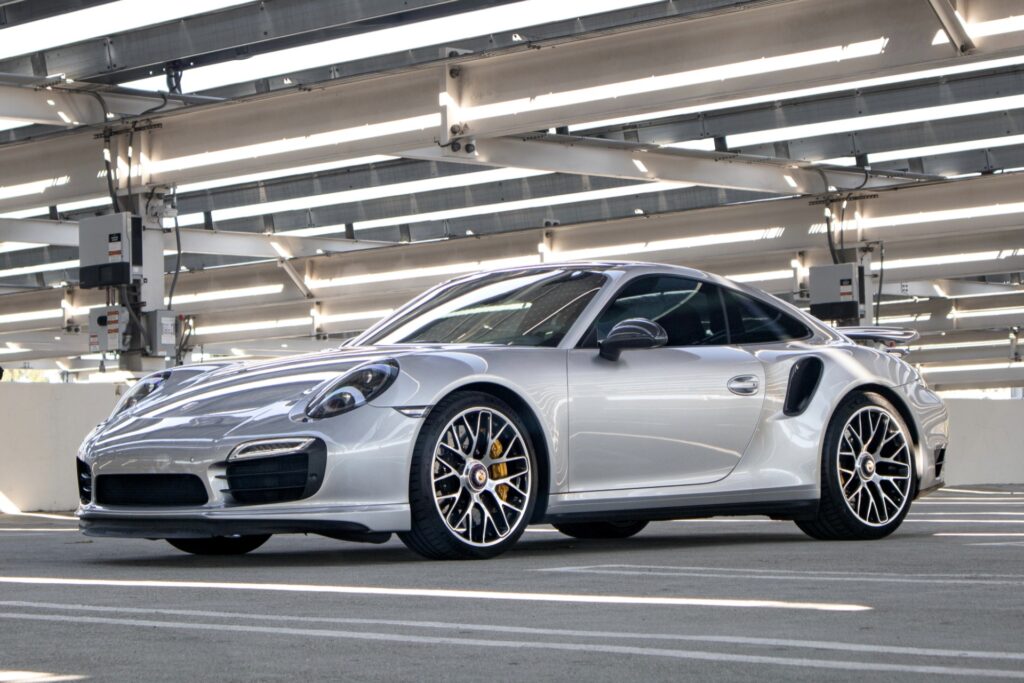
Depending on the 911, Porsche’s boxer six might be naturally aspirated or use a turbo engine. Models such as the 911 Turbo S combine staggering acceleration with all-wheel drive, while the GT3 and GT3 RS prioritize responsive steering, aerodynamic performance, and track capability.
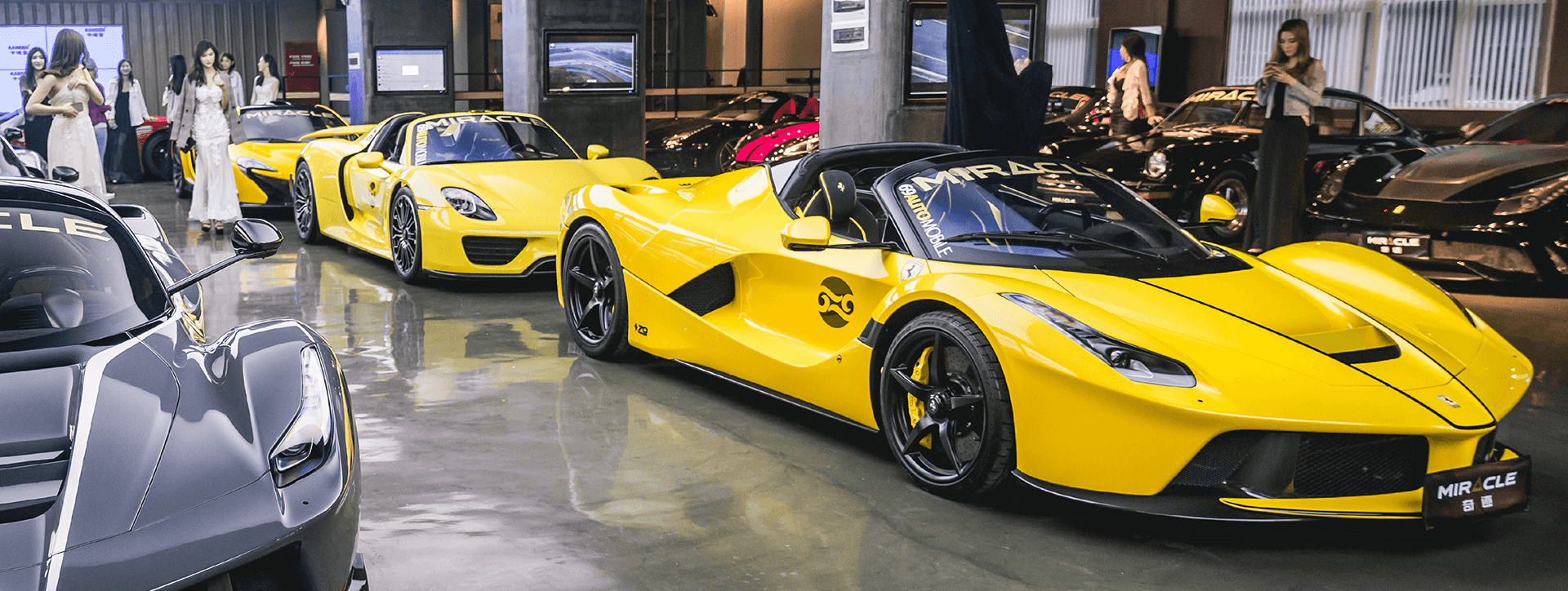
Then there is the Porsche 918 Spyder, which demonstrated that Porsche could build a hybrid hypercar capable of competing with the most exotic machines in the world.
Ferrari may deliver more drama, but don’t confuse Porsche’s more practical approach with a lack of excitement. A well-driven GT3 or GT3 RS can be one of the most thrilling experiences available in a road-legal car.
Ferrari vs. Porsche Design
You don’t need to see the badge to recognize most Ferraris or Porsches. Overall, Ferrari tends to make a statement. Porsche often lets the details reveal themselves more gradually.
Ferrari Design
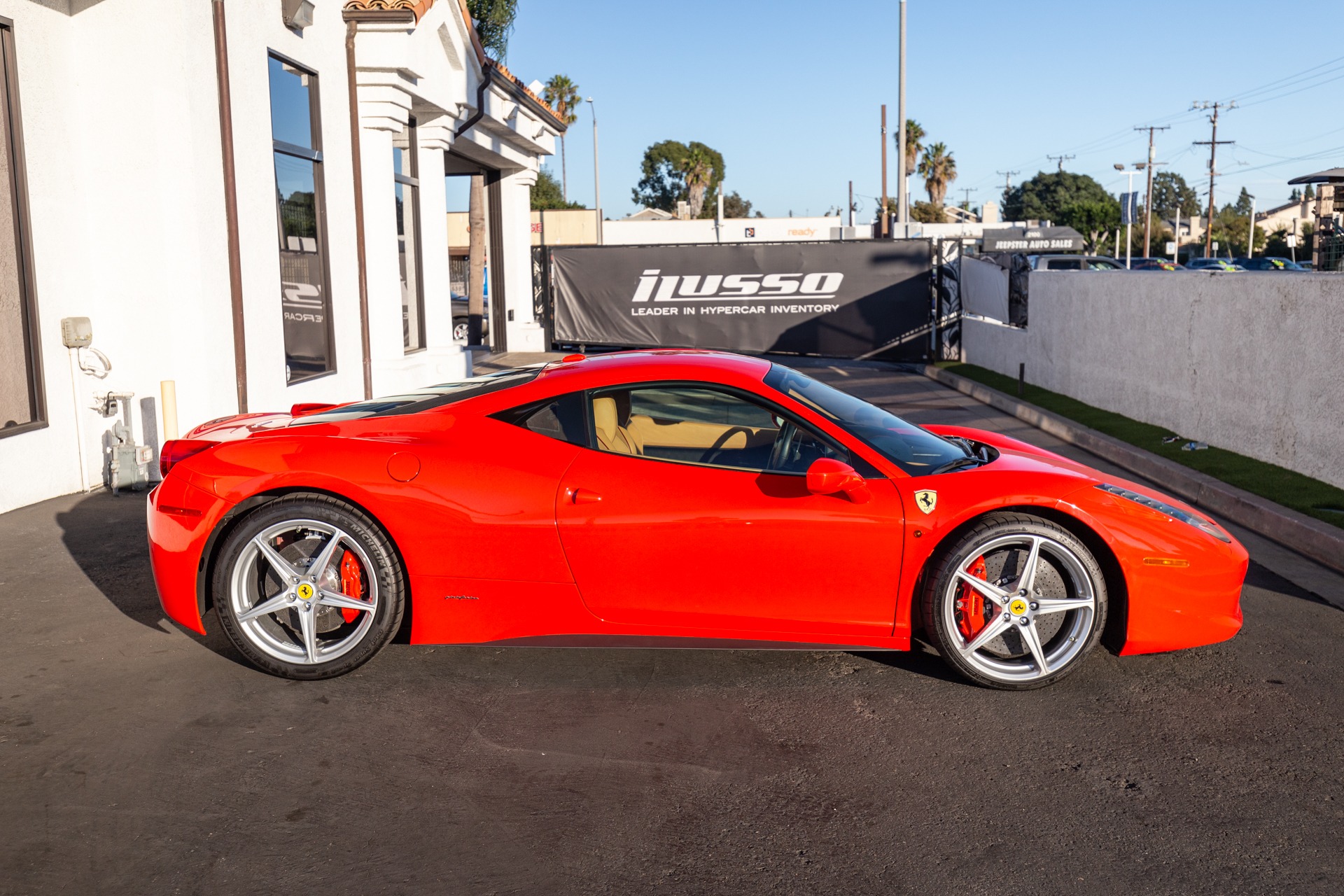
Ferrari design tends to be dramatic. Depending on the model, that can mean an elongated hood paired with a short rear section on its front-engine V12 cars or deeply sculpted aerodynamic surfaces on its mid-engine supercars. Carbon fiber, leather, metallic accents, and other premium materials reinforce the sense that you’re sitting in something exotic.
Ferrari interiors are also highly driver-oriented. Controls have increasingly migrated toward the steering wheel, keeping many of the car’s essential functions within the driver’s reach.
Porsche Design
Porsche generally takes a cleaner, more evolutionary approach.
Look at generations of the 911 side by side, and the family resemblance is unmistakable. The round headlights, sloped roofline, and distinctive proportions have evolved rather than been reinvented. Even particularly aggressive models such as the GT3 RS retain the underlying 911 shape beneath their aerodynamic elements and dramatic spoiler design.
Inside, Porsche historically favored a relatively minimalist approach built around the driver. Modern interiors have become much more technologically advanced, but functionality and usability remain important.
Which Brand Has the Better Model Lineup?
This is one category where Porsche has a clear advantage if versatility is what you’re after.
Porsche Lineup
Porsche’s current lineup extends well beyond traditional sports cars. Alongside the 911 and mid-engine 718 family, Porsche offers SUVs, the Panamera luxury sedan, and the electric Taycan.
Within the 911 family alone, buyers can choose among numerous performance levels, all-wheel-drive models, track-focused GT cars, and convertible versions.
That breadth makes Porsche particularly appealing for everyday use.
You could reasonably have a Cayenne as the family SUV, a Taycan as your daily driver, and a GT3 waiting for the weekend without leaving the Porsche brand.
Ferrari Lineup
Ferrari maintains a more limited lineup, although it has become significantly more versatile.
There are mid-engine supercars, front-engine grand tourers, convertible versions, and 2+2 sports car configurations. The Purosangue has also taken Ferrari into new territory by providing four doors, four individual seats, and considerably more everyday versatility than buyers historically expected from Maranello.
Still, Ferrari’s lineup remains focused on exclusivity. Porsche tries to build an exceptional performance vehicle for many different types of drivers. Ferrari keeps its universe smaller.
Ferrari vs. Porsche Pricing
Price creates one of the clearest distinctions between Porsche and Ferrari.
Porsche is significantly cheaper overall. That’s partly because Porsche produces far more vehicles and serves a much broader market. Buyers can enter the Porsche ecosystem without purchasing anything resembling an exotic car, while Ferrari operates almost entirely at the upper end of the performance and luxury markets.
That doesn’t mean every Porsche is inexpensive.
Certain 911 models can quickly enter exotic-car territory. A highly optioned GT3, GT3 RS, or other limited and desirable Porsche can cost hundreds of thousands of dollars, and rare collector models can command far more on the secondary market. At that level, Porsche offers cars with exclusivity and performance that can be compared much more directly with Ferrari products.
But across the brands as a whole, Ferrari prices are significantly higher.
For someone who wants an exceptional sports car they can use frequently, Porsche offers considerably more entry points. Ferrari asks for a larger financial commitment in exchange for a more exclusive experience.
Which Holds Its Value Better: Porsche or Ferrari?
Both brands can hold their value remarkably well, but model and specification matter enormously.
Porsche is very well liked in the resale market. Desirable 911 variants in particular can maintain strong demand, and certain limited-production or GT models have become serious collector cars.
Ferrari also has an exceptionally strong collector market. Production numbers, specifications, color combinations, service history, mileage, and rarity can all have a major effect on what an individual Ferrari is worth.
In both cases, buying the right car matters more than simply buying the right badge. A particularly desirable GT Porsche or limited Ferrari can behave very differently in the resale market from a higher-production model.
At iLusso, we wouldn’t recommend assuming that either badge automatically guarantees appreciation. Buy the right example, maintain it properly, and understand where that particular model sits in the market.
Porsche vs. Ferrari: Which Is Better For You?
So, should you buy a Porsche or Ferrari?
If you want exceptional engineering, precise handling, everyday usability, and a broader range of price points, we’d lean toward Porsche. The brand offers everything from comfortable daily drivers to 911 models capable of competing with some of the world’s most serious exotic cars.
If you want something that feels unmistakably exotic every time you start it, Ferrari has the advantage. Ferrari tends to give you more drama, exclusivity, sound, and power, but you’ll generally pay considerably more to get it.
At iLusso, we don’t think there’s a wrong answer here. We love both brands for different reasons.
Porsche has spent decades proving that an incredibly capable performance car can also be something you’d genuinely want to drive every day. Ferrari has spent decades proving that driving can still feel like an occasion.
The better car comes down to which experience you’re looking for.
Find Your Next Ferrari or Porsche at iLusso
You don’t have to settle the Porsche vs. Ferrari debate before you start looking.
At iLusso, we work with some of the world’s most desirable exotic and performance cars, including everything from Porsche 911s to modern and collectible Ferraris. If you know exactly which model you want, we can help you find the right example. If you’re still deciding between Stuttgart and Maranello, our team can help you understand the differences that matter once you’re actually behind the wheel.
Explore our inventory or contact iLusso to start looking for your next exotic car.