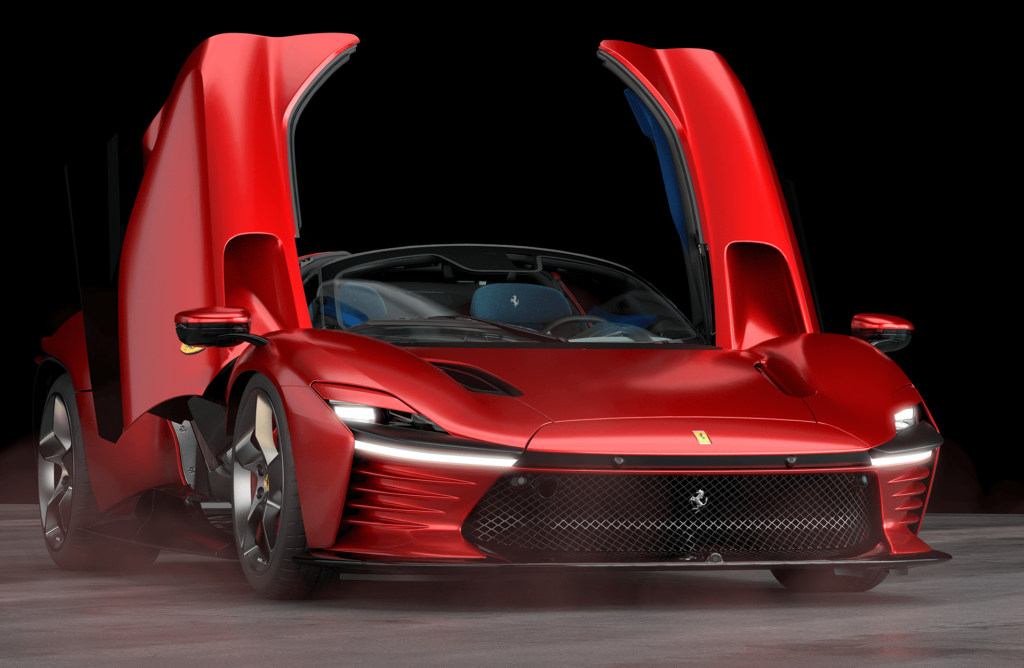
If you spend enough time around high-end supercars like we do at iLusso, one detail starts to show up everywhere: carbon fiber. It’s in the weave of a rear diffuser, the finish on interior trim, even the structure beneath the paint, and overall, it plays a much bigger role than just looks in the automotive world.
In short, carbon fiber is used on exotic cars to improve performance. Because carbon fiber, itself, is lighter than steel and extremely strong, it can make the car lighter and thus make it more aerodynamic. Read on to learn even more about this buzzword you hear constantly and why it is so sought after.
What is Carbon Fiber?
At its core, the use of carbon fiber materials comes down to performance. Built from tightly bonded carbon atoms and formed into advanced composite materials like CFRP (carbon fiber reinforced polymer), it offers an incredible combination of high strength and low mass. Compared to traditional materials like steel or aluminum, carbon fiber delivers a superior strength-to-weight ratio, which means less weight without sacrificing structural integrity.
For high-performance vehicles, that matters. Less weight improves acceleration, braking, and handling. It can even contribute to better fuel efficiency, though that’s usually not the first priority in sports cars or race cars. What matters is how the car feels at high speeds, how it responds through corners, and how stable it remains under pressure. Carbon fiber helps improve all of that.
Why Carbon Fiber Matters in Performance
When you reduce a vehicle’s weight, everything changes. Lighter cars are quicker, more responsive, and easier to control. That’s why automakers like BMW and others across the automotive industry have invested heavily in carbon fiber composites and other lightweight materials.
The advantages of carbon fiber go beyond weight savings:
- Durability: Carbon fiber has exceptional tensile strength and holds up well under stress
- Corrosion resistance: Unlike metal, it does not rust or degrade the same way over time
- Heat tolerance: It performs well under high temperatures, making it ideal for performance-focused automotive applications
- Aerodynamic function: Many carbon fiber components are shaped to improve airflow, stability, and downforce
From body panels to spoilers, carbon fiber is engineered to do a job. It is not just there for appearance. Every piece has a purpose, whether that is improving airflow, reducing drag, or enhancing the car’s balance.
Carbon Fiber in the Real World of Exotic Cars
At iLusso, we see the versatility of carbon fiber every day. It shows up in both performance-focused builds and cosmetic upgrades from the manufacturer. When ordering a Ferrari or other high-end exotic, there are often dozens of available carbon fiber car parts that can be added to the build.
Some builds include $20,000 to $60,000 or more in factory carbon options. These upgrades can impact not just the car’s specs, but also its long-term value. A well-optioned car with the right carbon package often stands out in the market and can command a stronger resale price.
It’s also worth noting that carbon fiber adds a distinct aesthetic appeal. The exposed weave, the gloss finish, the contrast against paint or leather. It signals performance before the car even moves.
Common Carbon Fiber Options You’ll See
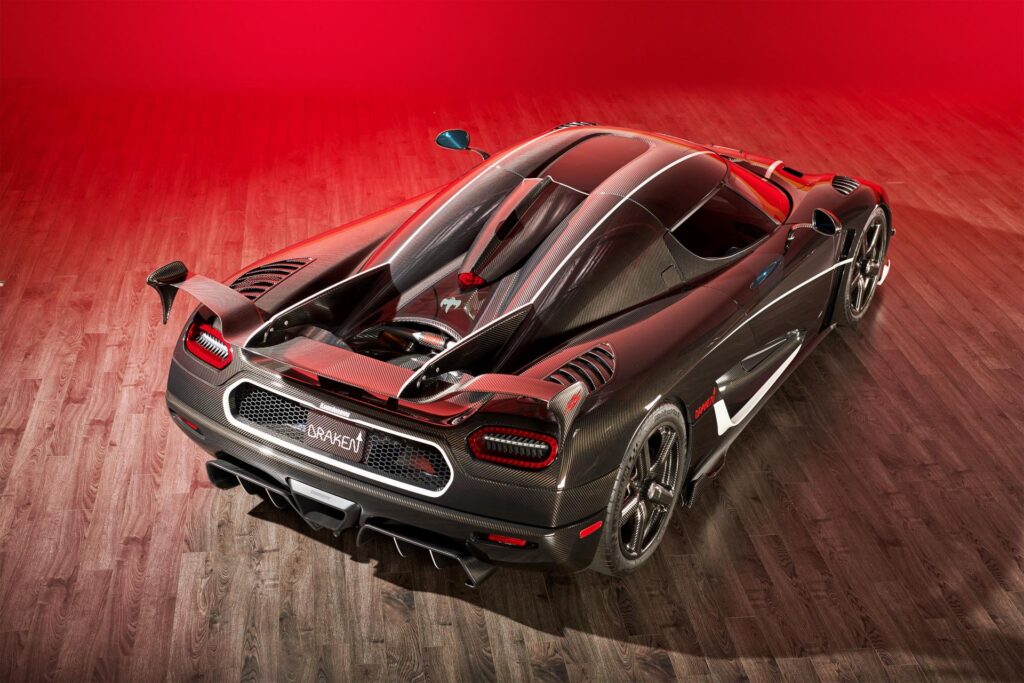
Below are some of the most common carbon fiber upgrades found on modern supercars and high-end builds. Each one plays a role in either performance, design, or both.
- Front splitter
The front splitter helps manage airflow at the front of the car. Carbon fiber reduces weight while improving aerodynamic performance and front-end stability at speed. - Side skirts
Side skirts control airflow along the sides of the vehicle. Carbon versions help reduce vehicle’s weight while enhancing the car’s overall aerodynamic balance. - Rear diffuser
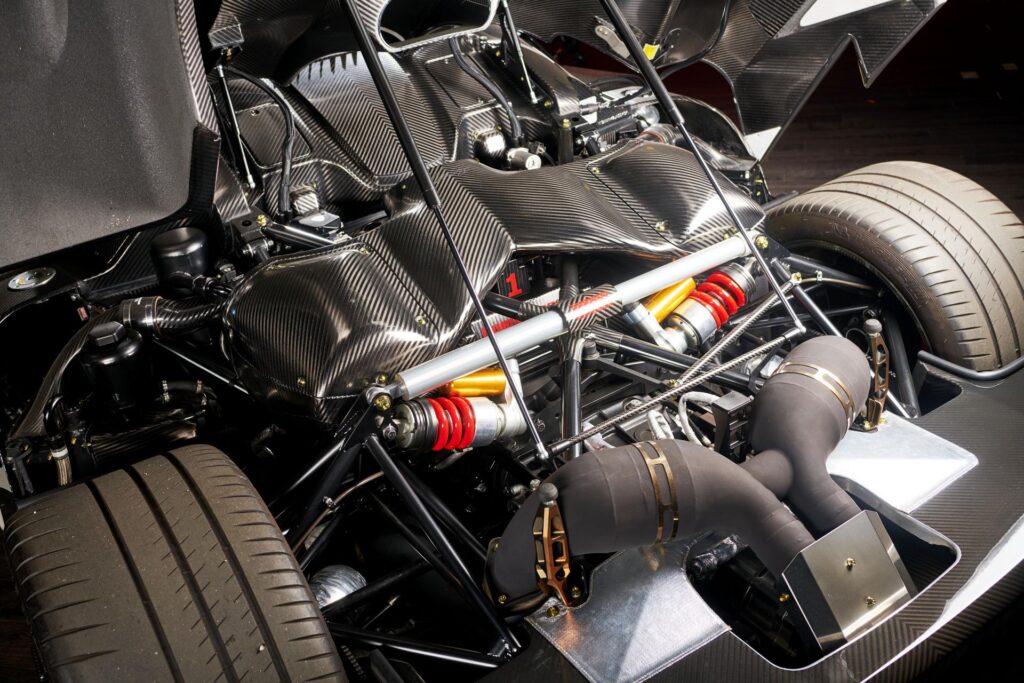
One of the most functional pieces, the rear diffuser improves airflow under the car. Carbon fiber keeps it lightweight while maintaining the strength needed for high-speed stability. - Engine bay trim
Carbon fiber in the engine bay adds both heat resistance and visual impact. It holds up well under high temperatures while elevating the presentation. - Interior
Interior carbon fiber components replace heavier trim pieces. This reduces the overall while adding a performance-focused look inside the cabin. - Carbon wheels (very expensive)
Among the most significant upgrades, carbon wheels offer major weight savings in unsprung mass. This improves handling, acceleration, and ride quality, but they come with a high price tag. - Carbon engine covers
These covers improve aesthetics and reduce weight slightly. They also handle heat well, making them both functional and visually striking. - Full interior carbon package
A full package replaces multiple interior elements with carbon fiber. This creates a cohesive look while reducing overall mass and enhancing the driving experience. - Carbon racing seats
Designed for performance, these seats are lighter and more rigid. They improve driver support and contribute to overall weight reduction. - Carbon roof
A carbon roof lowers the car’s center of gravity by removing weight from the highest point. This improves handling and overall balance. - Carbon buckets
Similar to racing seats, carbon buckets are ultra-lightweight and built for performance driving. They are common in track-focused race cars and road-going supercars. - Interior trim
Smaller trim pieces throughout the cabin can be replaced with carbon fiber. These upgrades are subtle but contribute to both weight savings and design consistency. - Weissach package (massive carbon bundle)
Found on select Porsche models, the Weissach package is a comprehensive carbon upgrade. It removes significant weight across the car and is one of the most impactful factory performance options available.
The Bigger Picture
The use of carbon fiber in the automotive industry continues to grow because it solves a fundamental challenge.
How do you make cars faster, stronger, and more efficient at the same time?
By combining high strength, low mass, and long-term durability.
Overall, carbon fiber continues to push what is possible in modern high-performance vehicles. Whether it is used in structural carbon fiber components or visual upgrades, it plays a key role in how today’s best cars are built.

Frequently Asked Questions
What does carbon fiber actually do in a car?
Carbon fiber makes a car lighter without giving up much strength. That lower weight helps the car accelerate faster, brake sooner, and feel sharper in corners. It also helps with aerodynamics when parts are shaped to guide airflow, like splitters, diffusers, and side skirts.
Why do carmakers use carbon fiber instead of steel or aluminum?
Carbon fiber has a stronger strength-to-weight ratio than steel or aluminum, so it gives engineers more freedom to cut mass while keeping parts rigid. In performance cars, that matters because every pound saved can improve response and stability. It also resists rust and handles heat well, which makes it useful in both structural and cosmetic parts.
Does carbon fiber make a car faster?
It can. A lighter car needs less energy to move, so it usually feels quicker off the line and more eager through corners. That said, carbon fiber doesn’t add horsepower on its own; it helps the car use its power more efficiently.
Does carbon fiber improve fuel economy or EV range?
Yes, because less weight means the engine or battery doesn’t have to work as hard. In gas cars, this can help fuel economy. In EVs, it can add range and reduce strain on the battery pack, which is why carbon fiber shows up more often in electric vehicle body parts and battery-related components.
Is carbon fiber safer than metal?
It can be, depending on how it’s used. Carbon fiber is stiff and strong, and it can absorb crash energy in useful ways when engineers design it for that job. That’s why it’s found in performance shells, safety cells, and other parts where controlled strength matters.
Carbon fiber helps most when the part is designed for a real job, not just for looks.
What carbon fiber parts do people usually add to cars?
Common upgrades include front splitters, side skirts, rear diffusers, spoilers, mirror caps, engine covers, roof panels, racing seats, and interior trim. On higher-end cars, buyers also choose carbon wheels, carbon buckets, and full carbon interior packages. These parts can improve weight savings, visual appeal, or both.
Is carbon fiber worth the money?
It depends on what you want from the car. For a track-focused build, a carbon roof, seats, or wheels can make a real difference in handling and balance. For a street car, the value often comes from a mix of performance, style, and resale appeal, since well-specced carbon options can help a car stand out in the market.

Talk to iLusso!
If carbon fiber is on your must-have list, you are not alone. The right options can completely change how a car looks, feels, and performs.
At iLusso, we work with some of the most well-optioned supercars on the market. Whether you are searching for a car with extensive carbon fiber upgrades or looking to sell one with a strong spec, our team knows what matters and how to position it.
Explore our inventory or connect with us today.



Most Recent Posts

Will the Alfa Romeo 4C Spider Become a Classic Exotic Car?
Monday 30,2022 By aanEditor
Alfa Romeo vehicles have always been among the most sought after and highly collectible cars, so it would be no surprise if there’s another of those with the 4C Spider. If you’re looking to buy an Alfa Romeo, this could be the classic car you should choose. What exactly is it that makes Alfa Romeo’s cars just so good anyway? One of their strongest
Read More
Will EV Hypercars Ever Become More Popular Than Traditional Hypercars?
Wednesday 10,2026 By aanEditor
For years, the automotive world has been asking the same question: Are electric hypercars the future? On paper, the answer seems obvious. Modern all-electric hypercars are producing performance numbers that would have seemed impossible just a decade ago. Instant torque, incredible acceleration, advanced torque vectoring systems, and cutting-edge
Read More
Why the Ferrari 458 Is Still A Car Enthusiasts Dream Car.
Wednesday 18,2023 By aanEditor
The Ferrari 458 is a mid-engined sports car produced by the Italian automotive manufacturer Ferrari. The 458 replaced the Ferrari F430, and was first officially unveiled at the 2009 Frankfurt Motor Show. It was succeeded by the Ferrari 488. The 458 is powered by a 4.5-liter V8 engine, which is capable of producing 562 horsepower and 398 lb-ft of torque.
Read More